


Alphabet Letter Formation Cards
Learning to write starts long before a child ever picks up a pencil for their first spelling test, it starts with knowing where to begin. Our free Alphabet Letter Formation Cards give children a clear, visual guide to forming each letter of the alphabet correctly, in both uppercase and lowercase, right from the very first stroke.
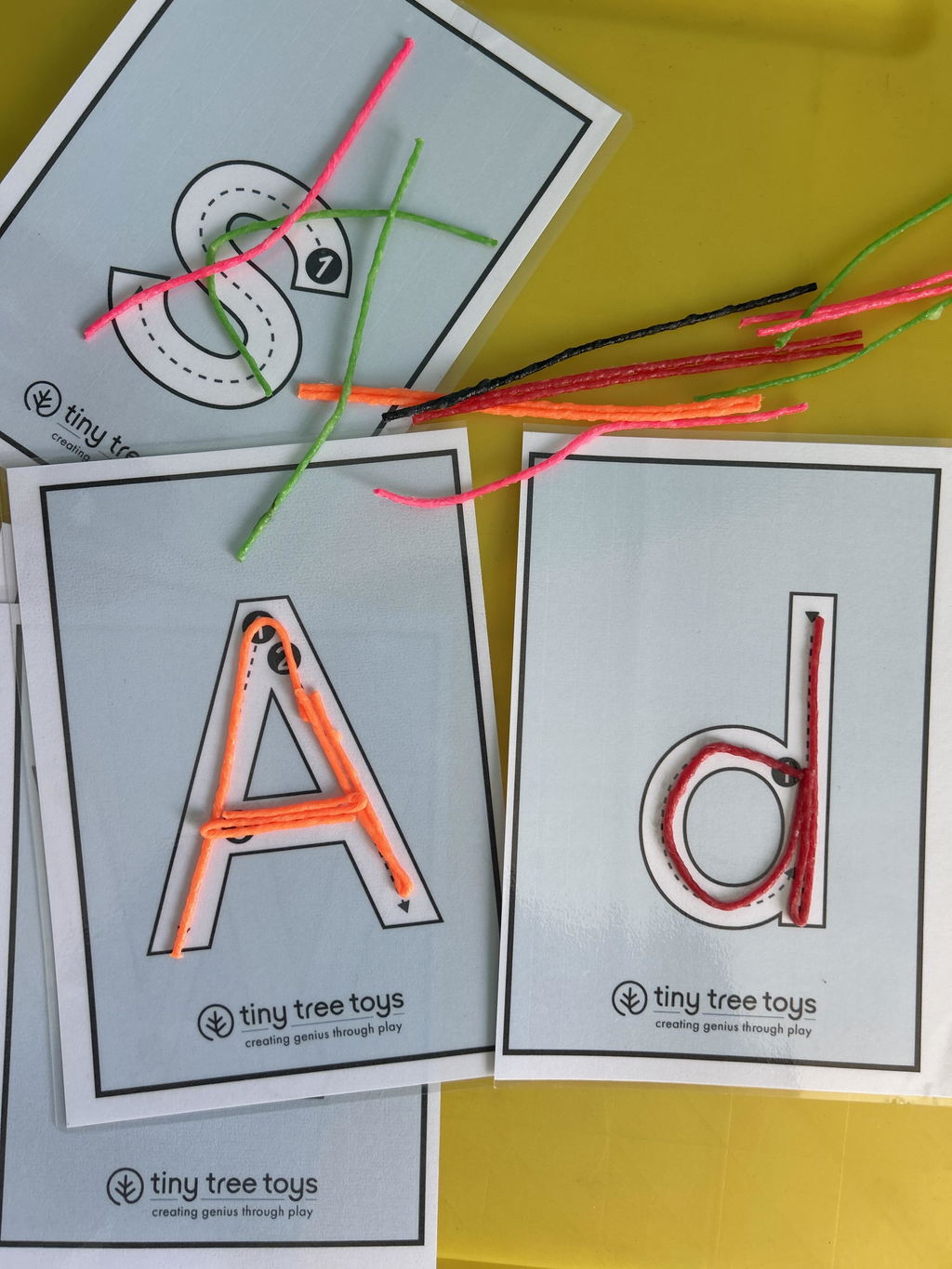
Each card shows a single letter with numbered starting points and dotted arrows tracing the correct path of formation, exactly the sequence an occupational therapist would teach in a handwriting readiness programme. As a practising OT, I see it often: children who've been writing letters for months, but starting them from the wrong point or building them in the wrong direction. Left unaddressed, this becomes a habit that's far harder to unlearn later. These cards are designed to get it right from the start.
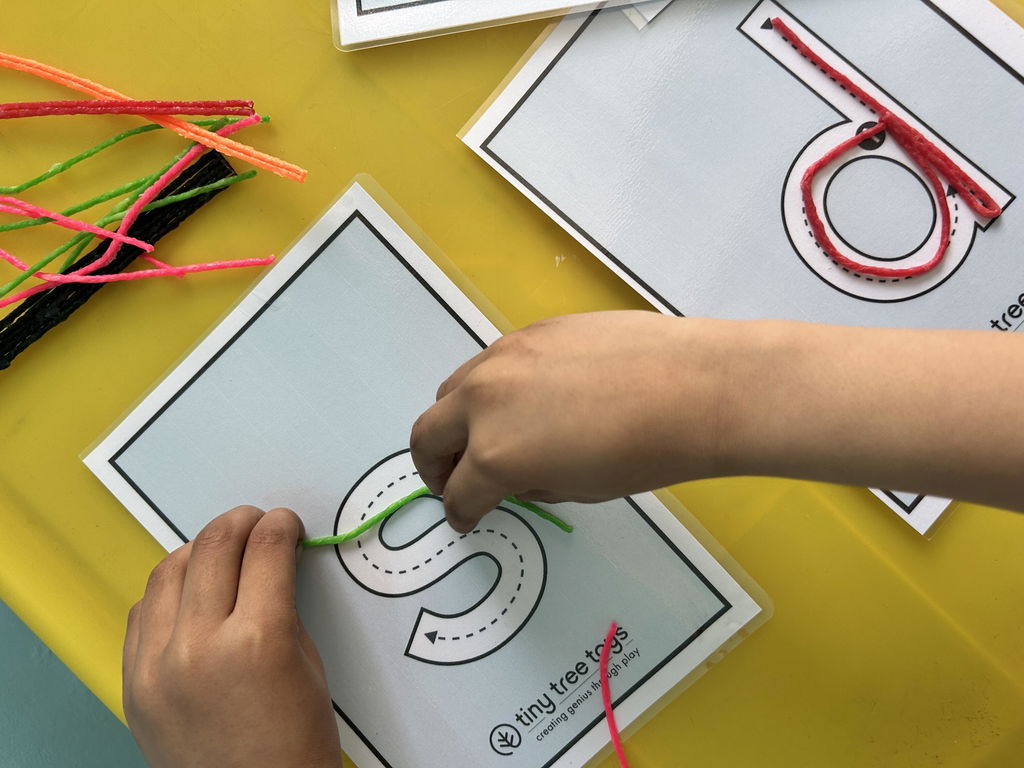
Use it again and again, laminate the sheets for reusable tracing with a whiteboard marker, roll out Play-Doh "snakes" for children to shape into each letter, or use loose parts and counters to build the letter along the guided path. However you use them, they turn letter formation into hands-on, screen-free practice rather than a worksheet to rush through.
What's Included:
- 1 x Digital PDF download: Alphabet Letter Formation Cards
- 26 x Uppercase letter cards (A–Z), each with numbered stroke-order guide
- 26 x Lowercase letter cards (a–z), each with numbered stroke-order guide
Total: 52 printable cards
3. What the OT Says
As an occupational therapist, correct letter formation is one of the very first things I check when a child comes to me struggling with handwriting and it's one of the easiest things to get right early, if we show children the correct starting point and direction from the beginning. These cards break each letter down into a simple numbered sequence, so a child isn't guessing where to start or building the letter in a way that will need to be corrected later.
The dotted tracing path supports fine motor control and pencil-grip development, while the repeated top-to-bottom, left-to-right strokes lay down the motor memory patterns needed for fluent, efficient handwriting later on. Following a numbered sequence also asks a child to hold a small plan in mind and carry it out step by step an early form of working memory and executive function that shows up again and again in school-readiness skills.
What I love most about this resource is how flexible it is. Laminate it and trace with a whiteboard marker for mark-making practice. Use Play-Doh to roll and shape each letter along the path for extra proprioceptive and hand-strengthening input. Add loose parts or counters along the numbered points for a multi-sensory approach that suits visual, tactile, and kinaesthetic learners alike. Each method reinforces the same correct pattern in a different sensory way, which is exactly how young children learn best.
I recommend this as a starting point for any child beginning pre-writing or handwriting practice, whether at home or in a therapy setting, it's simple, reusable, and gets the foundation right from the first letter.
Let customers speak for us
My son absolutely loves these balls to use on his playdough (he's 3). The fact that they stick together but you can also pull them apart is what really gets his attention.

Brilliant experience, fantastic price and by far my child's most favourite toy!
Thank you!

Thank you for all the free recourses. 💚

I bought this for my son as a level up from stacking cups. The cars add a fun element and I love that he can play with them on the train track too!

My 20 month old loves this shape sorter! It’s stimulating and looks great on his toy shelf.

I bought this ice cream counter for my granddaughter's 2nd birthday. She and her 5 year old sister absolutely LOVE playing with this. Their mother's reaction was 'WHAT a hit!' The younger one loves to stack and place, the colourful and sturdy pieces, in out of the slots of the counter and this will develop into proper pretend play as she gets older. I can see both girls playing with their ice cream counter for years to come as it will have a long shelf life due to both the quality of the parts and the play interest for a broad age group of children.
Innovative and a GREAT idea to level up the bath toy game!

I bought this outdoor easel for my son, and it has been an amazing addition to our garden playtime. The quality is excellent, and it's sturdy enough to withstand active play outdoors. My son loves spending hours drawing, painting, and using his imagination.
The easel was easy to assemble and has plenty of space for creative activities. It's also easy to clean, which is a huge bonus for messy art projects! I love that it encourages creativity, keeps him entertained, and gives him a fun way to enjoy the outdoors.
I highly recommend this outdoor easel to any parent looking for a durable, fun, and educational gift for their child.

I love using this in speech therapy as an incentive. The children find it very exciting to lift the discs off the table with the wand. Strong magnet.

I will order from Tiny tree toys again, their service was very professional and friendly.

A really lovely cuddly bedtime cloth - my grandson loves it :-) Good tactile features included that engage baby's senses and provide comfort.

All three of my girls are loving this simple addition to the outside play area. Seems quite strong as I absolutely launch them. Love the fact that the height is adjustable. Great product - Happy.

We absolutely loved the gorgeous gift that we received of the cutest black & white flower bouquet with Afr & Eng gift tags for Mother's Day of 2026!
It was simply lovely and só spot on!
Thank you Tiny Tree Toys! ⚘️

I absolutely love this puzzle, and have purched multiple ones as gifts. It is well crafted, and the wood is neatly rounded off. I'll be honest I've never played the game guidlines included, and rather use it as a catalyst in my creative processes. I love the fact that there are no rules to this, and the opportunity to use it as an expressive tool. My tiny human loves it too, and can play endlessly with captivated imagination.

Absolutely love the wooden stacking toys, I am trying to move away from plastic and purchase better quality educational toys for my baby and this is the perfect shop for that!
